Agents, and the UCL AI team

ISD Townhall

James Hetherington

2026-11-04

Live demo

Start by noting the time. Write a live audience poll from scratch, like Mentimeter or Slido, and put it live at https://research.jh.arc.ucl.ac.uk/vote

  • Phones open /vote and answer Yes or No to “I liked James’s Talk”. One vote per phone, and people can change their mind.
  • /vote/results goes on the projector: big live bars of the running totals, a small timeline underneath, and a QR code for the voting page. My slides show it in an iframe, so it must allow that.
  • It’s going on a big screen in front of a room of IT professionals, so make it striking, using UCL’s brand colours and type from www.ucl.ac.uk/isd.
  • New public GitHub repo in my account, with CI that tests it and deploys it through jh-infrastructure, like my other sites.
  • Get voting and results live first. Then, only if less than 9 minutes have passed since you started, add free-text comments that pop up on the results screen.
  • I’m on stage, so don’t ask me anything: make sensible choices and note them in the README.

What is an agent?

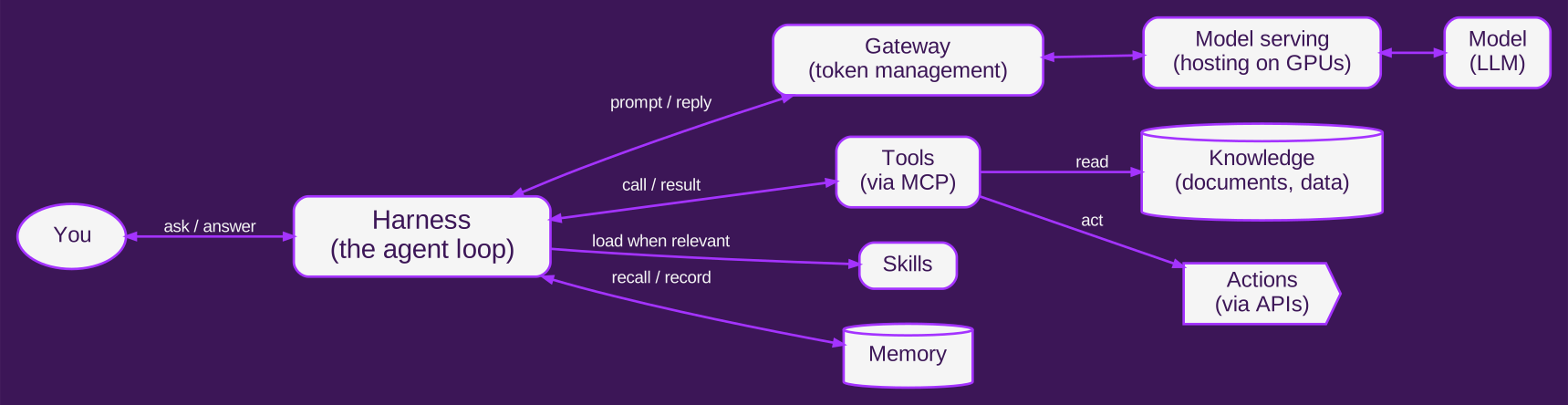
Diagram of an agent: you talk to a harness, which calls a model through a gateway and model serving, and uses tools, skills and memory

The harness

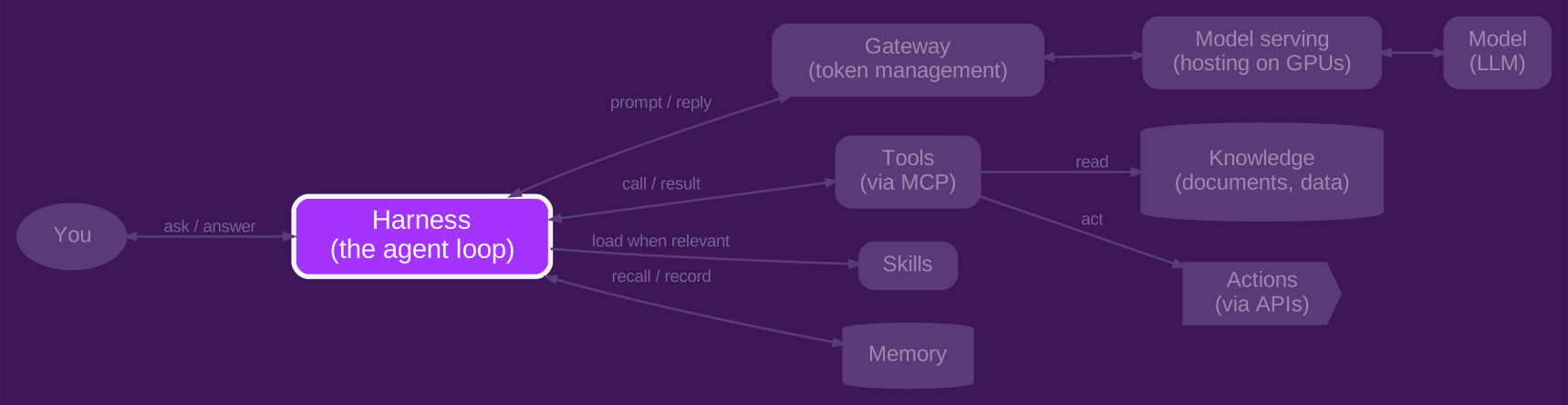
The agent diagram with the harness highlighted

The loop: ask the model, do what it asks, feed back the result, repeat. This is the product you see.

The model
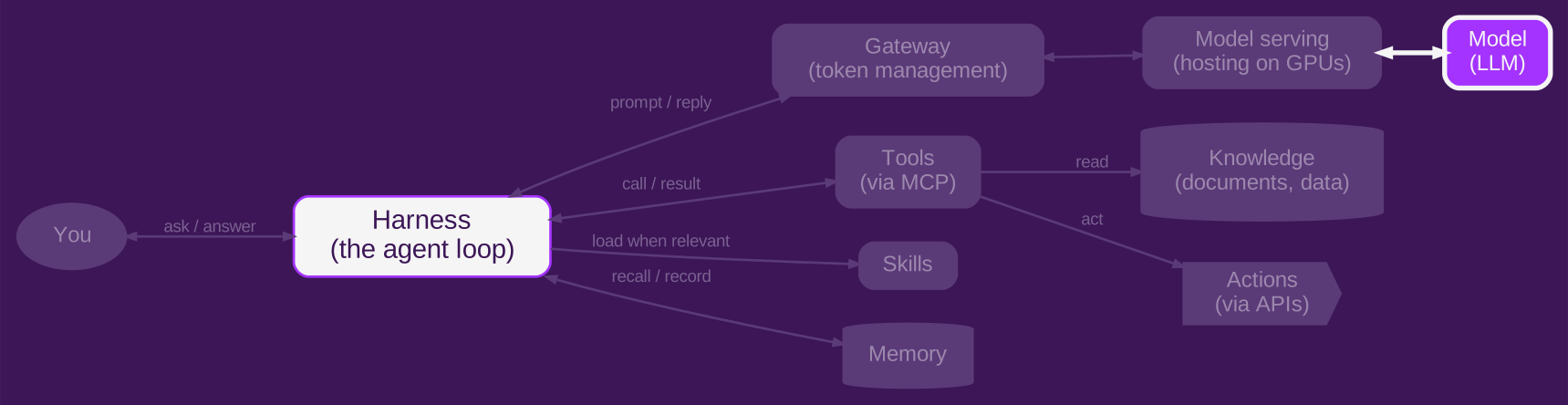
The agent diagram with the model highlighted

Predicts the next piece of text. Knows its training, plus what’s in front of it — nothing else.

Frontier: · Open weights:

The inference platform
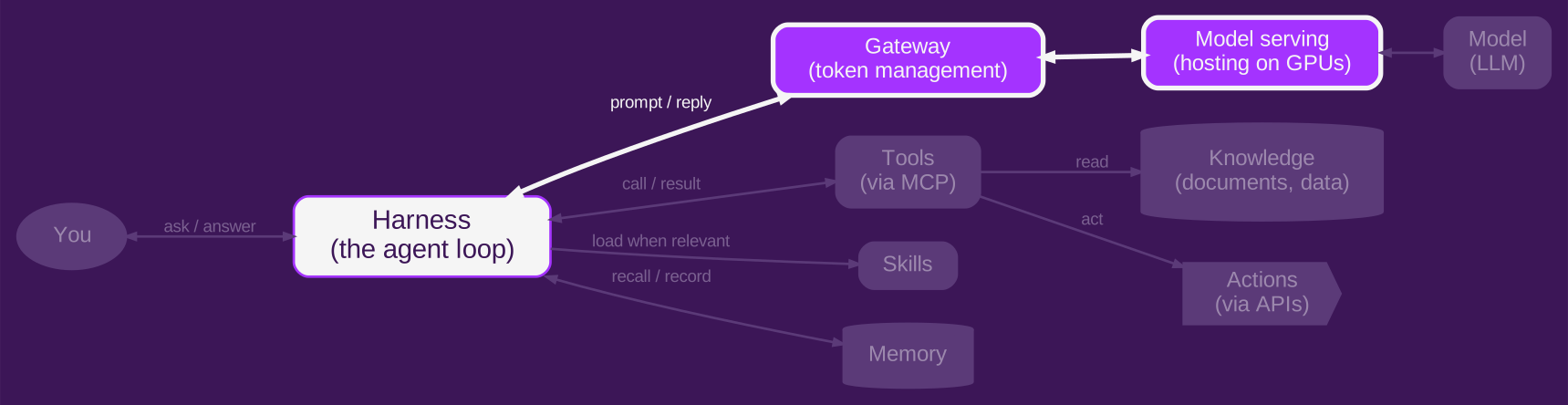
The agent diagram with the gateway and model serving highlighted

Same model, different place: who sees the data, what it costs, which contract. Gateway = token management; serving = hosting management.

Maker’s own: · Cloud: · Local:

Skills
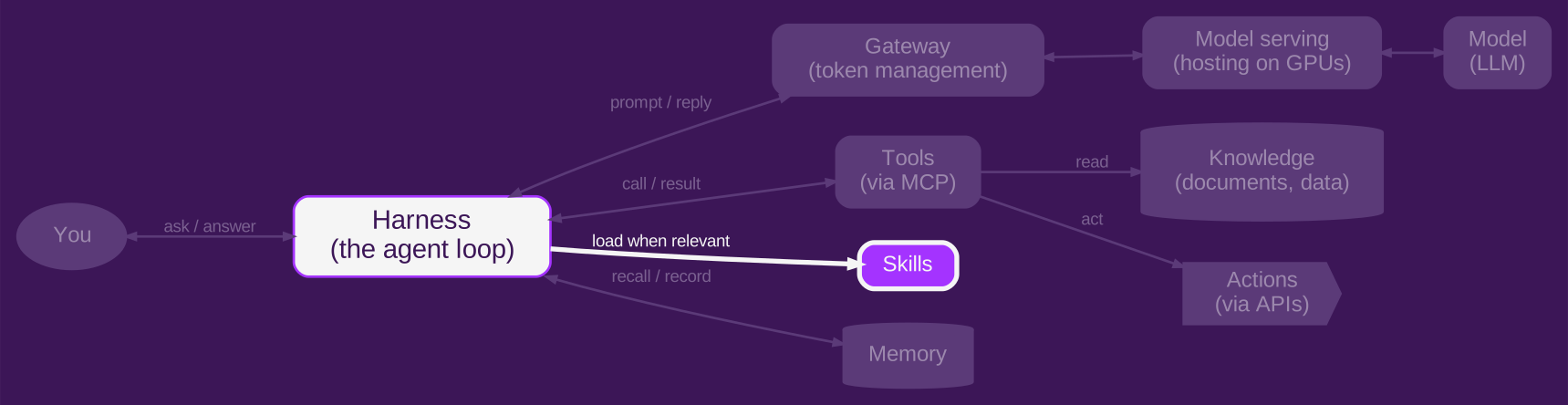
The agent diagram with skills highlighted

Packaged know-how — instructions and scripts — loaded only when the task needs them. e.g. “write an LBC”, “code with Easikit”.

Tools, via MCP
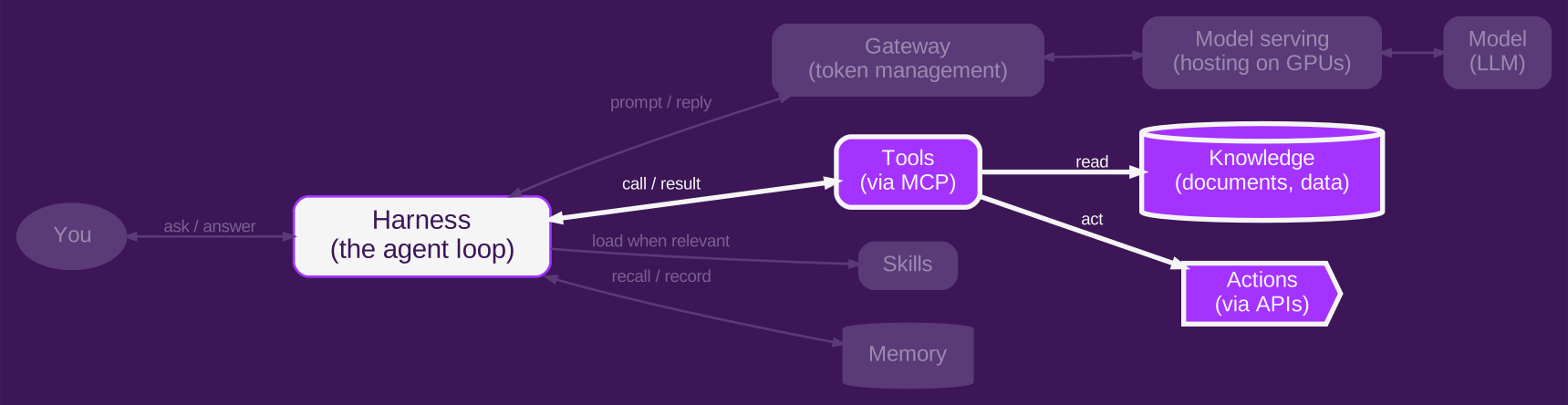
The agent diagram with tools highlighted

Let the agent act: search, read, file a ticket. MCP is one standard plug, so any agent can use any system.

Memory
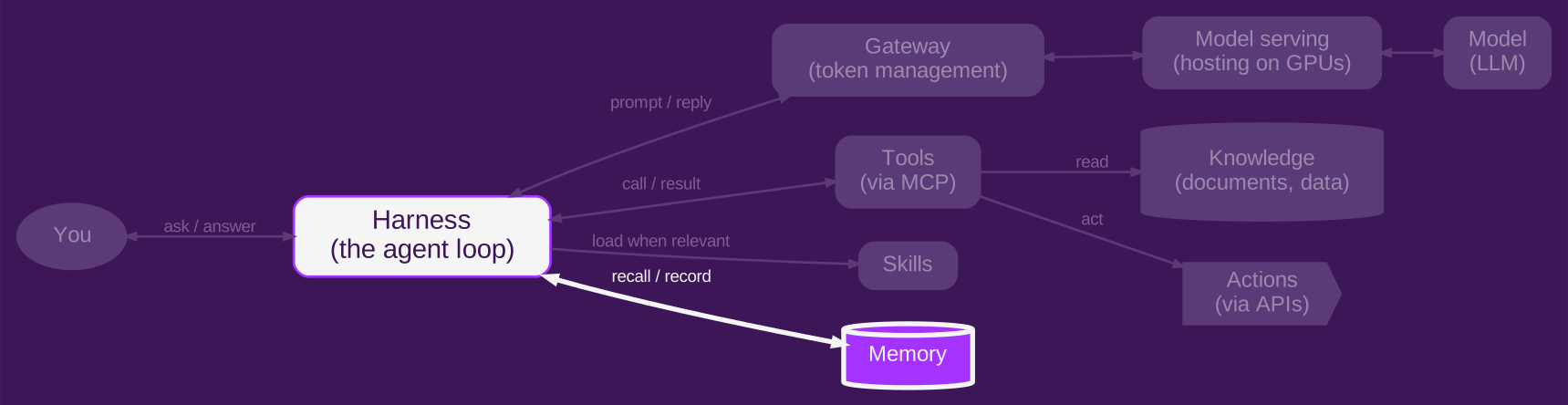
The agent diagram with memory highlighted

The model forgets everything between calls; the harness keeps notes. Yesterday an agent fixed our web server — its notes are in the repo for the next one.

At UCL

The AI team roadmap

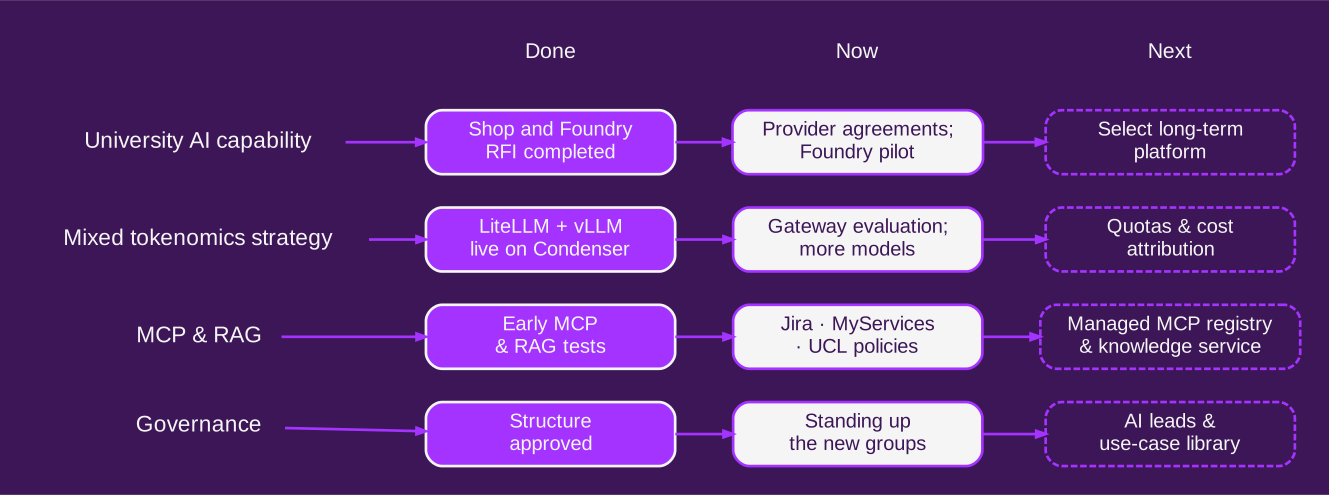
Roadmap with four strands: provider deals, local plus commercial, MCP and RAG, governance; each with done, now and next

Managing shadow AI

Staff already use consumer AI with UCL data; a trusted alternative beats a ban. Agreements with key providers, and the AI@UCL Foundry.

Tokenomics risks

  • Subscriptions: a flat price per seat
  • APIs: a price per token, and agents use a lot of tokens
  • A gateway gives us control, but puts everything on token pricing

Mixed supply strategy

Self-hosted

  • Some of our work can’t leave UCL
  • Some colleagues want locality on principle
  • But we run the whole stack

Commercial

  • Copilot: 365 integration comes built in
  • Anthropic: hosting comes built in, well integrated with Claude Code
  • But data leaves UCL

MCP and RAG for UCL

Early tests with Jira, MyServices and UCL policies (via RAG). Next: a managed MCP registry and knowledge service.

Governance

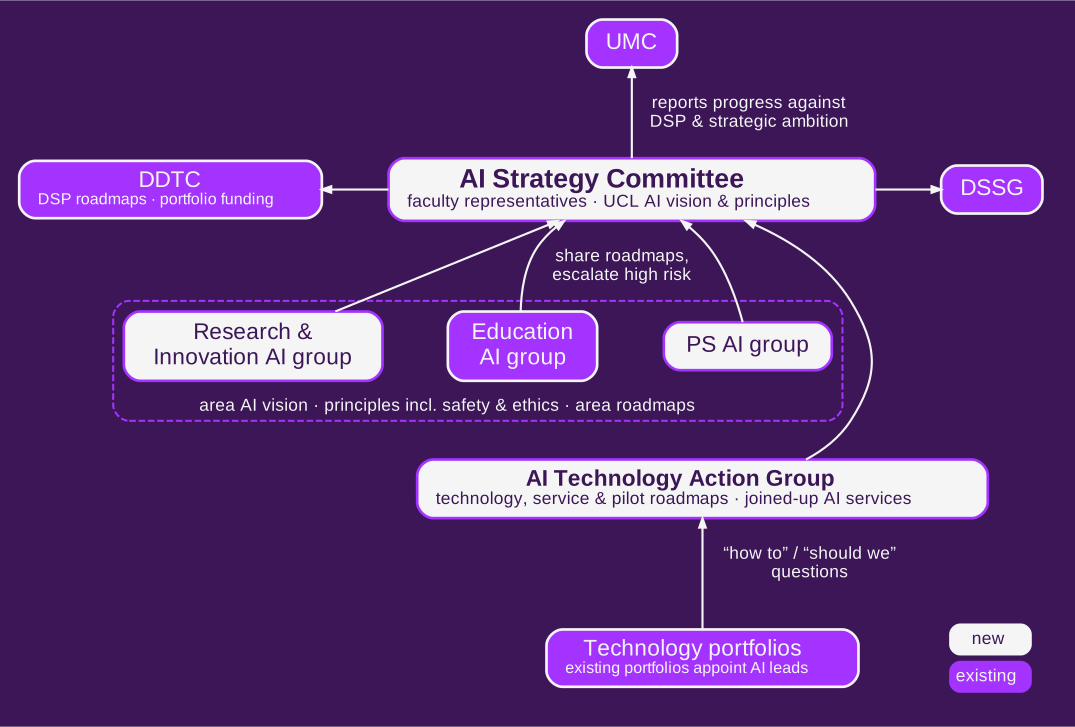
Approved AI governance: technology portfolios hand questions to a new AI Technology Action Group, which reports to a new AI Strategy Committee; so do the Research and Innovation, Education and PS AI groups; the Committee reports to UMC and works with DDTC and DSSG

Live demo: the result

research.jh.arc.ucl.ac.uk/vote/results

Questions?